- Home
- Health Guide
- Diet & recovery
Food for Piles – Fruits, Vegetables, Grains, and Nuts
Discover the best foods to eat when you have piles — fruits, vegetables, grains, and nuts that promote digestion, prevent constipation, and support healing.
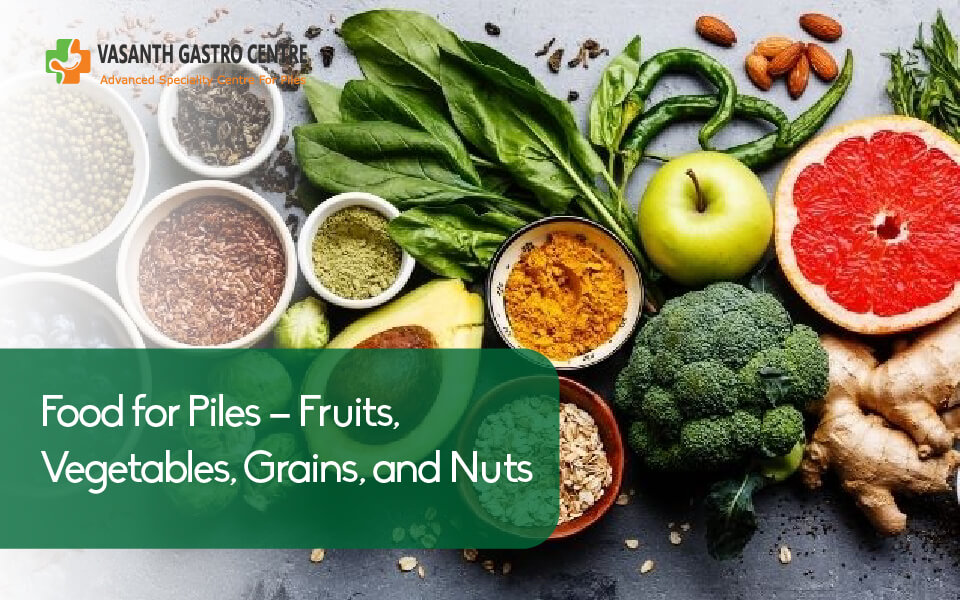
Diet plays a major role in managing piles and preventing flare-ups. The right food choices can soften stool, reduce inflammation, and promote healing. Below, we’ll explore the best fruits, vegetables, grains, and nuts that help relieve piles symptoms naturally.
Fruits That Help with Piles
Fiber and hydration are key to smooth digestion. Include these fruits regularly:
- Bananas: Soften stool and promote bowel movement.
- Apples: Rich in pectin, a soluble fiber that supports gut health.
- Papaya: Contains digestive enzymes that ease digestion.
- Oranges & Berries: High in vitamin C and antioxidants that support healing.
Vegetables That Improve Digestion
- Spinach and Broccoli: Rich in iron and fiber, help prevent constipation.
- Beetroot and Carrots: Improve blood circulation and reduce swelling.
- Sweet Potatoes: Contain complex carbs that aid digestion.
Whole Grains for Gut Health
- Oats: Contain beta-glucan fiber that keeps stools soft.
- Brown Rice & Whole Wheat: High in fiber and easy to digest.
- Millets: Excellent for improving stool consistency and regularity.
Nuts & Seeds to Include
- Almonds and Walnuts: Provide healthy fats and fiber.
- Flaxseeds and Chia Seeds: Rich in omega-3 and soluble fiber that lubricates stool.
Foods to Avoid During Piles
- Spicy and fried foods
- Red meat and processed foods
- Excessive coffee, alcohol, and refined flour
Doctor’s Advice
Dr. Ramesh Babu recommends drinking plenty of water (2.5–3L daily) and consuming fiber-rich foods. A balanced diet with light physical activity can significantly reduce piles symptoms and recurrence.
Medically reviewed by Dr. Ramesh Babu, MS, FIAGES — Chief Gastro & Colorectal Surgeon, Vasanth Gastro Centre, Chennai. For bleeding that doesn't stop, severe pain or fever, please see a doctor promptly.
This article is for general education and does not replace a consultation. Every patient is different — your doctor will advise what is right for you.